👋
Blog Post
Video Marketing Playbook for Small Businesses
A Practical Video Marketing Strategy for Small Business Growth
Share

Video Marketing Playbook for Small Businesses: A Practical Video Marketing Strategy for Small Business Growth
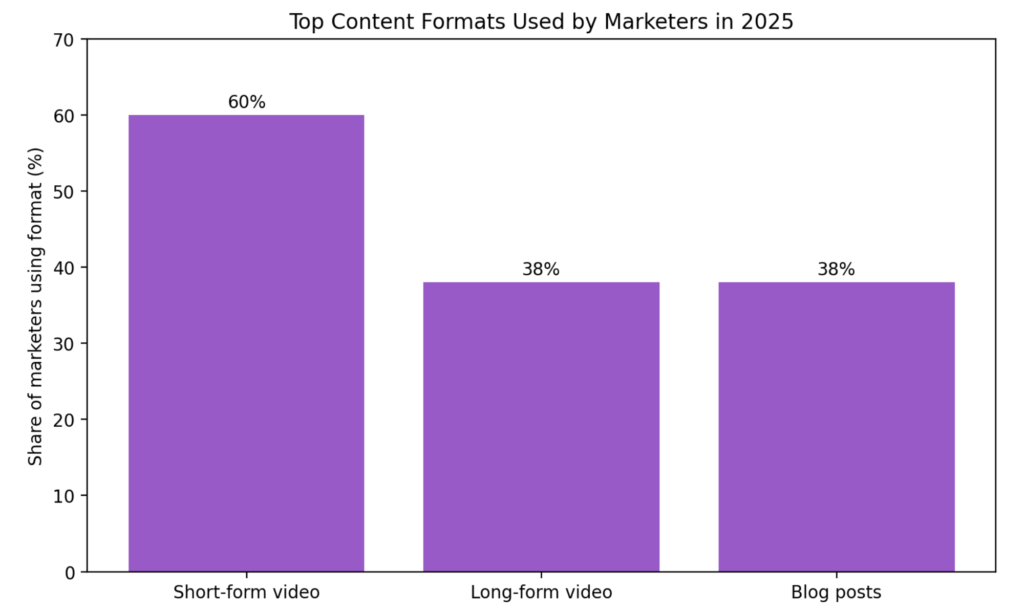
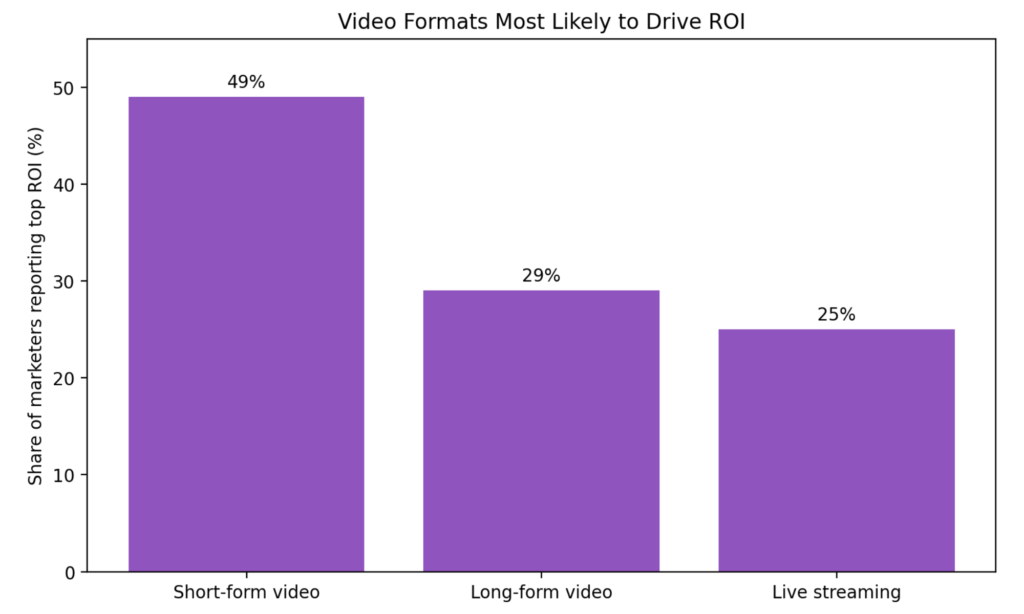
If you run a small business in 2026, video is no longer a “nice to have.” It is one of the clearest, fastest ways to earn attention, explain value, build trust, and move people from discovery to purchase. Recent marketing data shows that video is now one of the most widely adopted and highest-ROI content formats, with short-form video leading the field for both usage and return. HubSpot reports that short-form video was the most used content format among marketers in 2025, and that the top three ROI-driving content formats were all video-based: short-form video, long-form video, and live video. Wyzowl data cited by HubSpot also shows that 91% of businesses use video as a marketing tool in 2026.
For small businesses, that matters even more. You do not have the luxury of wasting budget on slow channels, vague messaging, or content that never gets seen. A strong video marketing strategy for small business use is not about becoming a media company overnight. It is about making the right videos, for the right audience, on the right platforms, with the right measurement model. That is what this playbook covers.
Why video matters more for small businesses than for larger brands
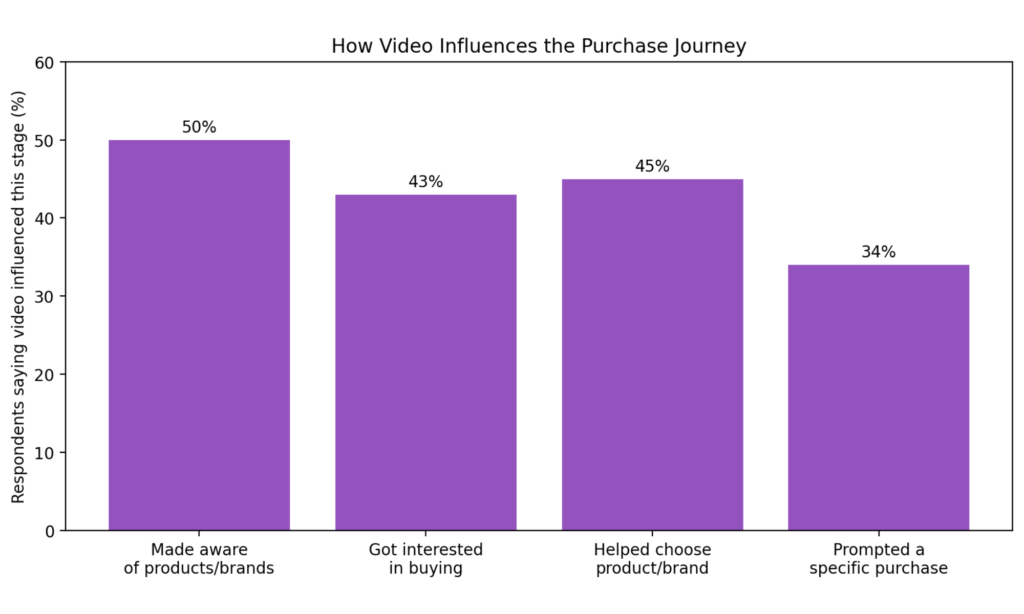
Large brands can afford inefficiency. Small businesses usually cannot. Video helps close that gap because it compresses trust-building into a format people already consume constantly. According to Google-commissioned BCG research summarized by Think with Google, video influences far more than awareness: among shoppers who said digital video played a role in their path to purchase, 50% said video made them aware of products or brands, 43% said it got them interested in buying, 45% said it helped them choose which product or brand to purchase, and 34% said it prompted them to buy a specific item.
That is a big reason video works so well for smaller companies. Most small businesses are not fighting a pure awareness problem; they are fighting a credibility problem. Prospects need to see your product in action, hear your expertise, understand your offer quickly, and feel confident that a real human stands behind the business. Video does all of that at once. It can demonstrate, reassure, educate, and persuade in a single asset.
There is also a format advantage. Google notes that vertical-friendly video ads are a best practice because the mobile-friendly, full-screen experience can improve engagement with mobile video viewers. For small businesses competing on feeds dominated by mobile usage, format alignment is not cosmetic; it directly affects how watchable and native your content feels.
The core idea behind a video marketing strategy for small business
A good video marketing strategy for small business owners is not “post more reels.” It is a system with five parts:
- A business goal
- A customer journey map
- A small set of repeatable video formats
- A distribution plan
- A measurement loop
This matters because random video posting creates activity, not growth. The strategy works when every video has a job. Some videos attract attention. Some explain your solution. Some handle objections. Some convert. Some retain existing customers. That full-funnel thinking mirrors Google’s recommendation that marketers build for a range of ad lengths and screens rather than rely on one-size-fits-all creative.
Start with the goal, not the camera
Before you script anything, decide what the business actually needs over the next 90 days. For most small businesses, video goals fall into one of four buckets:
Get discovered.
This is for businesses that need more reach, awareness, or local visibility.
Generate leads.
This is for service businesses, consultants, agencies, clinics, studios, and B2B firms that need inquiries, calls, bookings, or form fills.
Increase conversion.
This is for product brands, ecommerce sellers, and service businesses with traffic already coming in but too few people converting.
Improve retention and referrals.
This is for businesses that already have customers but want more repeat purchases, word-of-mouth, and loyalty.
Google Ads’ YouTube guidance recommends selecting campaign goals like leads, website traffic, or local store visits before building the campaign, then measuring success against the action that matters to the business. That same logic should guide your organic video strategy too.
Understand what your audience needs to believe
Most small-business video content fails because it answers the wrong question. The owner talks about features, but the customer is still wondering whether your offer is trustworthy, worth the money, easy to use, or relevant to their problem.
A better approach is to identify the beliefs your audience must adopt before buying. For example:
- “This business understands my problem.”
- “This product or service actually works.”
- “It is different from cheaper alternatives for a reason.”
- “The buying process looks easy.”
- “People like me use it successfully.”
Once you know the beliefs, your video ideas become obvious. Demonstrations build confidence. Before-and-after clips create proof. Founder videos humanize the brand. Testimonials reduce uncertainty. Educational videos build authority. FAQ videos remove friction. That is the real planning layer behind a sustainable video marketing strategy for small business brands.
Build your small-business video content stack
You do not need dozens of formats. You need a few dependable ones.
1. Short-form discovery videos
These are your attention assets: Reels, Shorts, TikToks, and feed videos. Their job is to stop the scroll and create curiosity. HubSpot’s marketing statistics show short-form video was the most leveraged media format in 2025, and the highest-ROI content format according to marketers. Sprout Social also reports that short-form video is especially engaging for consumers, and its social research is based on surveys of more than 4,000 consumers and over 1,200 marketing professionals and leaders.
Google’s Shorts guidance is especially useful here: the best-performing Shorts ads tend to feel native to the feed rather than like traditional ads, and viewers will quickly swipe away content that feels boring or irrelevant. Think with Google also highlights that immediate attention capture matters more than ever in short-form environments.
For small businesses, good short-form themes include:
- quick tips
- common mistakes
- myth vs truth
- behind-the-scenes moments
- product transformations
- mini case studies
- local relevance clips
- FAQs answered in under 30 seconds
2. Consideration videos
These explain why someone should choose you. They usually live on your website, YouTube channel, landing pages, product pages, and email sequences. This is where service explainers, product demos, walk-throughs, comparison videos, and founder-led “how we work” videos belong.
Wistia’s 2025 State of Video coverage notes that longer videos generally see lower engagement rates than shorter videos, but that does not mean long video is ineffective. Longer videos can still generate more total watch time, and how-to content performs especially well: Wistia reports that 3–5 minute how-to videos can reach 74% engagement.
That is a key takeaway: short-form gets discovered, but helpful long-form content often does the selling.
3. Conversion videos
These are the videos closest to money. Think:
- testimonial videos
- offer breakdowns
- objection-handling clips
- pricing clarity videos
- limited-time campaign videos
- FAQ videos on checkout, booking, shipping, delivery, warranties, or guarantees
Google’s BCG-backed consumer journey findings are important here because they show video is not just awareness media. It actively helps people choose and buy. That makes conversion video one of the most underused assets in many small businesses.
4. Retention and loyalty videos
Most small businesses underinvest after the sale. But onboarding videos, customer education, usage tips, advanced tutorials, and community spotlights can increase repeat purchase and reduce churn. They also fuel referrals because customers who get results are more likely to recommend you.
If you sell a product, make videos that help customers get more value from it. If you sell a service, create post-purchase guidance so clients feel momentum immediately.
Use a multiformat strategy instead of one “hero” video
One of the smartest takeaways from Google’s video guidance is that brands should not think in terms of one perfect video. They should think in terms of multiple formats working together. Think with Google notes that YouTube Shorts can drive discovery while longer videos deepen engagement, and that creators using both long-form and Shorts often see stronger overall watch time and subscriber growth.
For a small business, that means one core topic can become:
- a 20-second Reel
- a 60-second social explainer
- a 3-minute website video
- a YouTube tutorial
- an email embed
- a retargeting ad
- a customer support clip
This is one of the best ways to make video affordable. You are not creating from scratch every time. You are creating once, then adapting by funnel stage and platform.
Production quality: Good enough is often better than over-produced
Small businesses often delay video because they assume quality must be cinematic. The data suggests the bigger issue is usually execution and consistency, not Hollywood polish. Wyzowl data cited by HubSpot shows that one of the biggest reasons marketers do not use video is simply not knowing where to start. At the same time, Google’s Shorts guidance says the most effective short-form ads often feel more like native content than conventional advertising.
That is freeing. Your videos need to be clear, useful, well-lit, audible, and on-brand. They do not need to feel expensive. In many cases, a smartphone, a clean background, natural light, a lapel mic, and strong scripting are enough to outperform a glossy but generic video.
Where small businesses should publish video
Your best channels depend on the business model, but a practical rule is this:
Own your conversion surfaces.
Your website, landing pages, product pages, Google Business Profile assets, and email flows should be the first places where your best videos live.
Use social for discovery and demand creation.
Short-form platforms are excellent for reach, but do not rely on rented audiences alone.
Use YouTube for search, depth, and evergreen value.
Google calls YouTube the world’s most popular digital video platform and highlights its ability to reach audiences across different goals, from awareness to action. It also supports keyword-based targeting and performance measurement within Google Ads.
HubSpot’s reporting also notes that YouTube remains one of the most widely used video marketing platforms, while Wistia found company websites and email are among the top places businesses actually share video. That is a strong reminder: your social strategy and your owned-channel strategy should support each other, not compete.
What metrics actually matter
Views alone are not a strategy.
Google recommends measuring success based on the business objective of the campaign, such as visits, leads, or purchases. Wistia also notes that many marketers now connect their video platform to CRM or email tools so they can track performance alongside the rest of their marketing data.
For a small business, the most useful metric stack usually looks like this:
For awareness: reach, view rate, watch time, thumb-stop rate, audience retention
For consideration: average view duration, clicks to site, product-page visits, engaged sessions
For conversion: leads, bookings, add-to-cart, purchases, assisted conversions
For retention: repeat purchase rate, support deflection, onboarding completion, referral actions
The mistake is measuring every video by the same standard. A Reel designed for discovery should not be judged the same way as a testimonial video on a sales page.
A simple 90-day video marketing strategy for small business owners
If you want a realistic rollout, use this structure.
Month 1: Build the foundation
Create:
- 1 brand story or founder video
- 2 service or product explainer videos
- 6 short-form discovery videos
- 3 FAQ videos
- 1 testimonial or case study video
Set up:
- YouTube channel basics
- landing-page embeds
- simple tracking with UTMs, forms, and conversion events
- a content calendar tied to business goals
Month 2: Create consistency
Publish:
- 2–3 short-form videos per week
- 1 longer educational video every 2 weeks
- 1 email campaign using video
- 1 retargeting campaign based on video viewers or site visitors
Refine:
- first-two-second hooks
- thumbnails and titles
- stronger CTAs
- better audience targeting
We wrote a practical, beginner-friendly digital marketing guide for small businesses. It covers everything from SEO to Paid Ads. Have a quick read & implement to scale your business.
Month 3: Optimize for results
Double down on:
- topics with the best watch time and click-through
- formats that produce inquiries or sales
- landing pages where video improves conversion
Cut:
- videos with weak retention and no downstream business effect
- formats that take too long to produce relative to value
- channels that generate vanity metrics but not pipeline
This is the discipline that separates “doing video” from running a real video marketing strategy for small business growth.
Common mistakes that weaken small-business video marketing
The first mistake is trying to copy large creators or brands without adapting to your own audience. What works for entertainment is not always what works for trust or conversion.
The second mistake is posting only promotional videos. Google’s Shorts guidance is clear that content that feels like a conventional ad is easier to swipe past. Native, useful, audience-aware creative tends to perform better.
The third mistake is producing for one platform only. Think with Google explicitly recommends designing for multiple lengths, screens, and environments. Discovery and conversion often happen in different places.
The fourth mistake is failing to measure beyond views. If your business goal is leads or sales, you need to know which videos move people further into the journey.
The future-proof approach: combine short-form reach with long-form trust
One of the clearest patterns in current video marketing is that the best strategies are not either-or. They combine short-form visibility with deeper educational or persuasive content. HubSpot’s latest marketing statistics show short-form video leading usage and ROI, while Google’s own guidance emphasizes multiformat storytelling and full-funnel planning. Wistia’s performance insights reinforce that longer, helpful videos still have a major role to play, especially when buyers need explanation or reassurance.
That makes video especially powerful for small businesses. You can earn attention with quick clips, then convert demand with demos, testimonials, and answer-driven videos on your site and YouTube. You do not need a giant content team. You need clarity, consistency, and a system.
Final takeaway
The smartest video marketing strategy for small business owners is not to chase every trend. It is to build a repeatable engine:
- make short videos that earn attention
- make helpful videos that build trust
- make proof-driven videos that remove doubt
- publish them where customers actually decide
- track what creates business outcomes
- repeat what works
Video is now one of the most proven ways to compress awareness, education, persuasion, and conversion into one medium. The businesses that win with it are not necessarily the ones with the biggest budgets. They are the ones with the clearest message, the strongest understanding of their customer, and the discipline to turn every video into a business asset.

At Full Traffic, we specialise in SEO Services – focussed on conversions over rankings. Hit the button below to know more.