👋
Blog Post
The Top AI Tools for SEO in 2026
Reviewed and compared the best AI-driven SEO tools for keyword research, content generation, and technical site audits
Share
The Top AI Tools for SEO in 2026:
Reviewed and compared the best AI-driven SEO tools for keyword research, content generation, and technical site audits
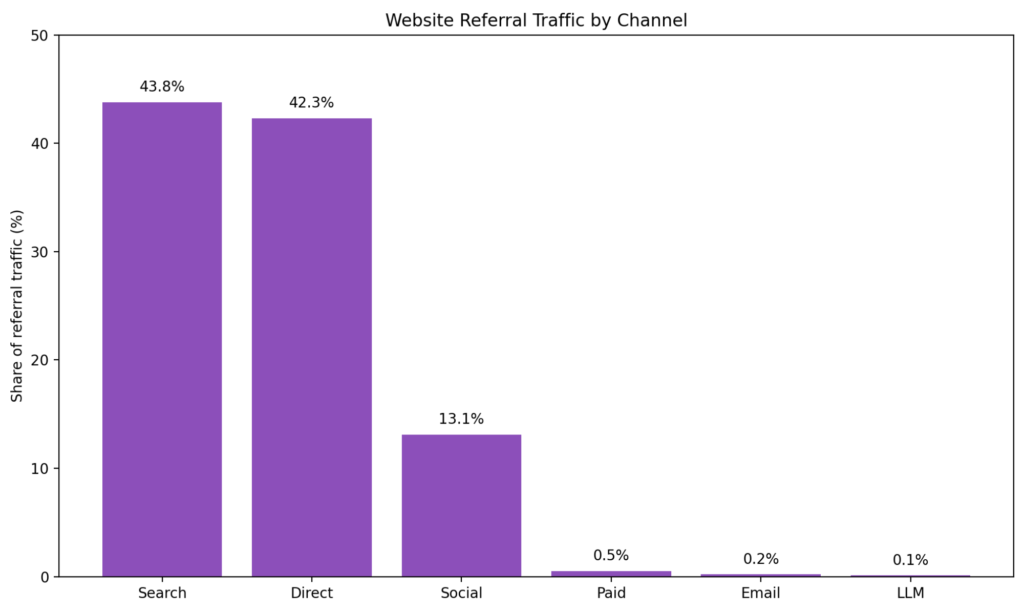
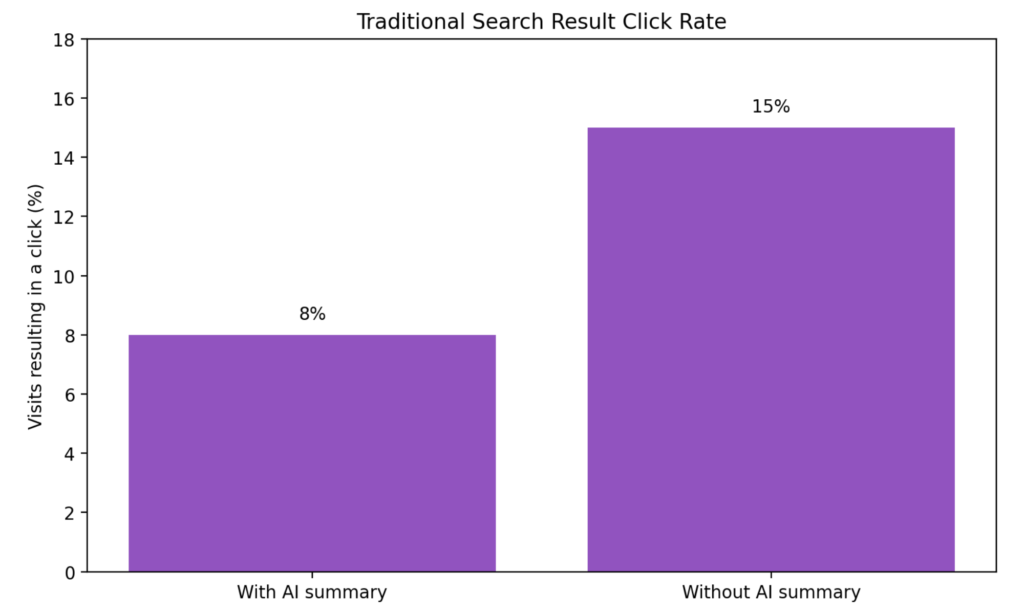
Search in 2026 is not just a “10 blue links” game anymore. The winning SEO teams now optimize for three layers at once: classic organic search, Google’s AI search experiences, and third-party AI discovery platforms such as ChatGPT, Gemini, and Perplexity. But that does not mean traditional SEO has stopped mattering. Ahrefs’ study of roughly 35,000 websites found search still drives 43.8% of referral traffic, while LLM traffic accounts for just 0.1%. At the same time, Pew found that when Google users saw an AI summary, they clicked a traditional search result in only 8% of visits, versus 15% when no AI summary appeared. Semrush’s large-scale AI Overviews study also found those experiences moving deeper into lower-funnel queries, with commercial, transactional, and navigational trigger rates all rising sharply since October 2024.
That is exactly why the best AI SEO tools in 2026 are not merely “AI writers.” The best platforms now combine keyword intelligence, content optimization, technical crawling, workflow automation, and AI visibility monitoring. The old question was, “Which tool helps me publish faster?” The new question is, “Which tool helps me publish better, debug faster, and stay visible across both search results and AI-generated answers?”
Google’s own guidance is unusually clear here. Using generative AI is acceptable when it helps produce accurate, relevant, useful content; using it to mass-produce pages without adding value can violate spam rules on scaled content abuse. Google also says there are no special technical requirements or special schema types needed to appear in AI Overviews or AI Mode; the same foundational SEO best practices still apply. In other words, AI does not replace SEO fundamentals. It raises the bar for originality, usefulness, crawlability, and page experience.
For this review, we weighted each tool on five criteria: keyword intelligence, content workflow, technical SEO depth, AI visibility features, and operational value. The rankings below are editorial judgments based on the current public feature sets, documentation, and pricing pages from the vendors themselves.
The quick verdict
If you want the single best all-around platform, Semrush is the strongest overall choice. If keyword research and competitive analysis matter most, Ahrefs is still the leader. If technical SEO is your bottleneck, Screaming Frog remains indispensable. For optimization-led content teams, Surfer is the best fit. For editorial teams that care about polish and workflow, Clearscope is excellent. For large content inventories and strategic planning, MarketMuse stands out. For agentic, lean-team workflows, Frase is one of the smartest picks. For value-conscious teams, SE Ranking is hard to beat. And for AI-first visibility plus content production, Writesonic is one of the most aggressive products in the category.
1. Semrush — best overall AI SEO platform
“The old assumption that “better rank = roughly proportional traffic upside” is breaking down. In an AI SERP, rank can remain stable while traffic economics deteriorate.”
Access SEM Rush here.
Semrush is the best overall AI SEO platform in 2026 because it now covers the full stack more convincingly than almost anyone else: research, technical SEO, reporting, AI-driven recommendations, and AI visibility monitoring. Semrush positions its platform around “SEO authority and AI visibility,” its AI Visibility Toolkit is built to show how brands appear in AI-generated answers, and Semrush Copilot automatically analyzes multiple tools and reports to produce recommendations and alerts. Its SEO toolkit also highlights a 26.2 billion keyword database and AI-curated keyword clustering. Public pricing currently starts at $117.33/month billed annually for Pro.
What makes Semrush so useful is not that every individual module is always the deepest on the market. It is that the modules connect well. Research can flow into planning, audits can flow into reporting, and AI visibility can sit beside traditional SEO metrics instead of becoming a separate workflow. For agencies and in-house teams with multiple stakeholders, that integration matters more than people admit. The biggest downside is cost and complexity: smaller operators can end up paying for a lot of surface area they will never use.
2. Ahrefs — best for keyword research and competitive intelligence
Access Ahrefs here.
If your SEO strategy starts with search demand, competitive gaps, link-backed authority, and topic sizing, Ahrefs remains the best tool on the market. Ahrefs now combines Keywords Explorer, Site Audit, AI Content Helper, AI Content Grader, Brand Radar, and an AI Visibility Checker inside the same ecosystem. Its pricing page emphasizes the scale of its crawler and positions the platform around discoverability in “search, AI, and beyond.” Its Lite plan is publicly listed at $129/month, while the content-focused add-on stack starts at $99/month.
Ahrefs is especially strong when the real question is not “How do I write this page?” but “Should I even target this topic, and if so, what is the smartest angle?” That is why it remains such a strong fit for SaaS companies, publishers, affiliates, and digital PR teams. Its Site Audit still provides a health score and issue prioritization, and the AI content layer is much better than it used to be. The tradeoff is that some writers and editors will still find Surfer or Clearscope more immediately usable inside day-to-day drafting workflows.
3. Screaming Frog SEO Spider — best technical SEO crawler with AI
SEO can no longer be evaluated only as a traffic acquisition channel. It increasingly functions as a visibility channel, a brand reinforcement channel, and a conversion-assist channel.
AccessSEO Spider here.
Screaming Frog is still the tool serious technical SEOs reach for when the real debugging starts. It remains a website crawler built to audit common onsite SEO issues, but it has evolved well for the AI era. Its SEO Spider now supports direct AI integrations with OpenAI, Gemini, Ollama, and Anthropic, and the configuration documentation shows users can set up up to 100 prompts against crawl data. The free version crawls up to 500 URLs, and the paid license is listed at £199 per user per year.
That combination makes Screaming Frog far more than a crawler. It becomes a programmable technical analysis workbench. Advanced users can classify pages, summarize templates, identify weak copy blocks, flag indexing patterns, or extract page-level intelligence during the crawl itself. No, it is not beginner-friendly, and it does not replace a broader suite for reporting or content planning. But if crawl waste, duplication, migrations, internal linking, rendering problems, or structural debt are holding back performance, Screaming Frog is still the sharpest knife in the drawer.
4. Surfer — best AI content optimization tool for production teams
Access Surfer SEO here.
Surfer has grown from “content score software” into a broader optimization platform for publishing teams. Its current product and pricing pages point to a stack that includes Topical Map, Content Editor, automatic internal linking, cannibalization reporting, audits, SERP analysis, and AI-prompt tracking in higher plans. Public pricing starts at $49/month billed yearly for Discovery, with Standard at $99/month and Pro at $182/month.
5. Clearscope — best for editorial quality control
Access Clearscope here.
Clearscope remains one of the most editor-friendly tools in SEO. In 2026 it has widened its positioning from pure content optimization toward broader discoverability, with messaging centered on being found across Google, ChatGPT, and what’s next. Its product pages emphasize writing, optimization, visibility tracking across Google and AI chatbots, and analytics for published content. Public pricing currently starts at $129/month for Essentials.
The reason Clearscope still matters is adoption. Many SEO tools are theoretically powerful but culturally hard for editorial teams to live inside. Clearscope has long been better than most at making optimization feel like part of writing rather than a separate compliance exercise. If your biggest bottleneck is consistency, refresh prioritization, and raising the quality floor across a content team, Clearscope is one of the best tools you can buy. It is less attractive as your only SEO platform, though, because it is not trying to be a full research-and-technical suite.
We created a checklist that helps you dominate Google and LLMs in 2026. The checklist has practical SEO tips that the top SEOs use daily. Get it for FREE.
6. MarketMuse — best for content strategy and inventory planning
Access MarketMuse here.
MarketMuse still owns one of the most important strategic questions in SEO: what should you create, what should you update, and what should you stop spending time on? Its planning pages focus on assessing content against the SERP, using topic value plus current performance to decide what deserves action. Its “Why MarketMuse” pricing page still lists an Optimize tier starting at $99/month.
That makes MarketMuse especially useful for mature sites with hundreds or thousands of URLs. If you already have a large content estate, the biggest gains often do not come from generating more articles. They come from pruning, consolidating, refreshing, and reallocating effort toward topics where your site actually has authority to win. MarketMuse is not the best choice for a tiny site that just needs a cheap drafting workflow. But for strategic editorial planning, it is still one of the smartest tools in the category.
7. Frase — best AI agent workflow for lean teams
Access Frase here.
Frase has pushed harder than most SEO vendors into the “agentic” model. Its current platform pages describe Frase as an SEO and GEO platform where the agent can access SEO data, competitor analysis, AI visibility tracking, site auditing, topic clusters, content atomization, programmatic SEO, and direct CMS publishing. Its pricing page says every plan includes the full Frase Agent and starts at $39/month.
That makes Frase one of the most attractive choices for lean in-house teams, consultants, founders, and smaller agencies that want one AI-heavy workflow from research to optimization to publishing. It compresses cycle time well. The tradeoff is that large organizations may still prefer the deeper specialist layers that come with pairing a research suite like Ahrefs or Semrush with a dedicated editorial or technical platform. Frase is fast and increasingly capable; it just is not always the deepest specialist in every module.
8. SE Ranking — best value all-in-one suite
Access SE Ranking here.
SE Ranking has become much more compelling in the AI era because it is no longer just the “cheaper SEO suite.” Its current pricing and feature pages position it around visibility across traditional search and AI answers, with website audit, rank tracking, keyword and competitor research, content tools, AI Sources tracking, AI competitor research, AI Results Tracker, and prompt-level AI visibility tooling. Public pricing starts at $103.20/month annually for Core, or $129/month month-to-month.
For SMBs, consultants, and agencies, that is a lot of coverage for the money. The platform gives you enough technical auditing, research, collaboration, and AI-search monitoring to build a serious workflow without jumping immediately to enterprise-suite spend. It is still not the default “deepest” brand in keyword research, nor the purest technical tool, but on value-for-breadth it is one of the strongest options on the market.
9. Writesonic — best AI-first hybrid of content and AI visibility
Access Writesonic here.
Writesonic is one of the clearest signals of where the category is going. It is not just selling article generation now. Its current platform pages emphasize visibility tracking across ChatGPT, Gemini, Perplexity, and 10+ platforms, citation and sentiment monitoring, competitor visibility analysis, AI-assisted technical fixes, and a content engine meant to create and refresh pages that rank in Google and get cited by AI. Public pricing starts at $39/month.
That makes Writesonic a strong choice for teams that care about AI search visibility as a KPI, not just content throughput. It is especially interesting for companies trying to connect prompt-level discoverability data with faster content iteration. The tradeoff is that advanced research-heavy or technical-heavy teams will still usually want a second specialist platform. Writesonic is not replacing Ahrefs or Screaming Frog for power users. It is replacing fragmented “writer tool + AI tracker + lightweight optimizer” setups.
The data behind the shift
The first big takeaway is that classic search still does the heavy lifting. Ahrefs’ traffic study found search at 43.8% of referral traffic, compared with 42.3% for direct, 13.1% for social, 0.5% for paid, 0.2% for email, and 0.1% for LLMs. That is why any SEO tool that neglects technical health, keyword opportunity, and content quality is still solving the wrong problem.
The second takeaway is that AI search layers are still reshaping click behavior enough that visibility cannot be measured only by blue-link rankings anymore. Pew found traditional-result clicks drop from 15% of visits without an AI summary to 8% with one. Semrush’s 10M+ keyword study also found AI Overviews reaching farther into lower-funnel search, including commercial and transactional intent. That combination is exactly why vendors are racing to build AI visibility monitoring into SEO workflows.
Which tool should you actually use?
For a solo consultant or niche-site operator, I would lean toward Ahrefs + Frase if research quality is the priority, or SE Ranking + Surfer if cost control matters more.
For a mid-market in-house team, Semrush + Surfer + Screaming Frog is the most balanced stack. Swap Clearscope in for Surfer if the content org is more editorial than growth-led.
For a large publisher, Ahrefs + Screaming Frog + Clearscope is a premium combination, with MarketMuse added if the site has a huge archive that needs prioritization, pruning, and consolidation.
For a SaaS brand focused on AI discovery, I would pair Semrush or Ahrefs for core SEO intelligence with Writesonic or SE Ranking’s AI search stack for AI visibility monitoring, then keep Screaming Frog in the stack for technical hygiene.
Bottom line
The best AI SEO tools in 2026 are not the ones that promise infinite content at the push of a button. The best ones help you do three things better than your competitors:
- identify the right opportunities,
- ship stronger pages faster, and
- protect discoverability across both classic search and AI-generated answers.
If I had to reduce this entire guide to one line per winner, it would be this:
- Best overall: Semrush
- Best research depth: Ahrefs
- Best technical SEO: Screaming Frog
- Best content optimization: Surfer
- Best editorial workflow: Clearscope
- Best content strategy planning: MarketMuse
- Best AI agent workflow: Frase
- Best value suite: SE Ranking
- Best AI-first visibility + content hybrid: Writesonic
The brands that win SEO in 2026 will not be the ones that publish the most AI content. They will be the ones that use AI tools to publish better research, better pages, and better user experiences faster than everyone else.
We wrote a practical, beginner-friendly digital marketing guide for small businesses. It covers everything from SEO to Paid Ads. Have a quick read & implement to scale your business.